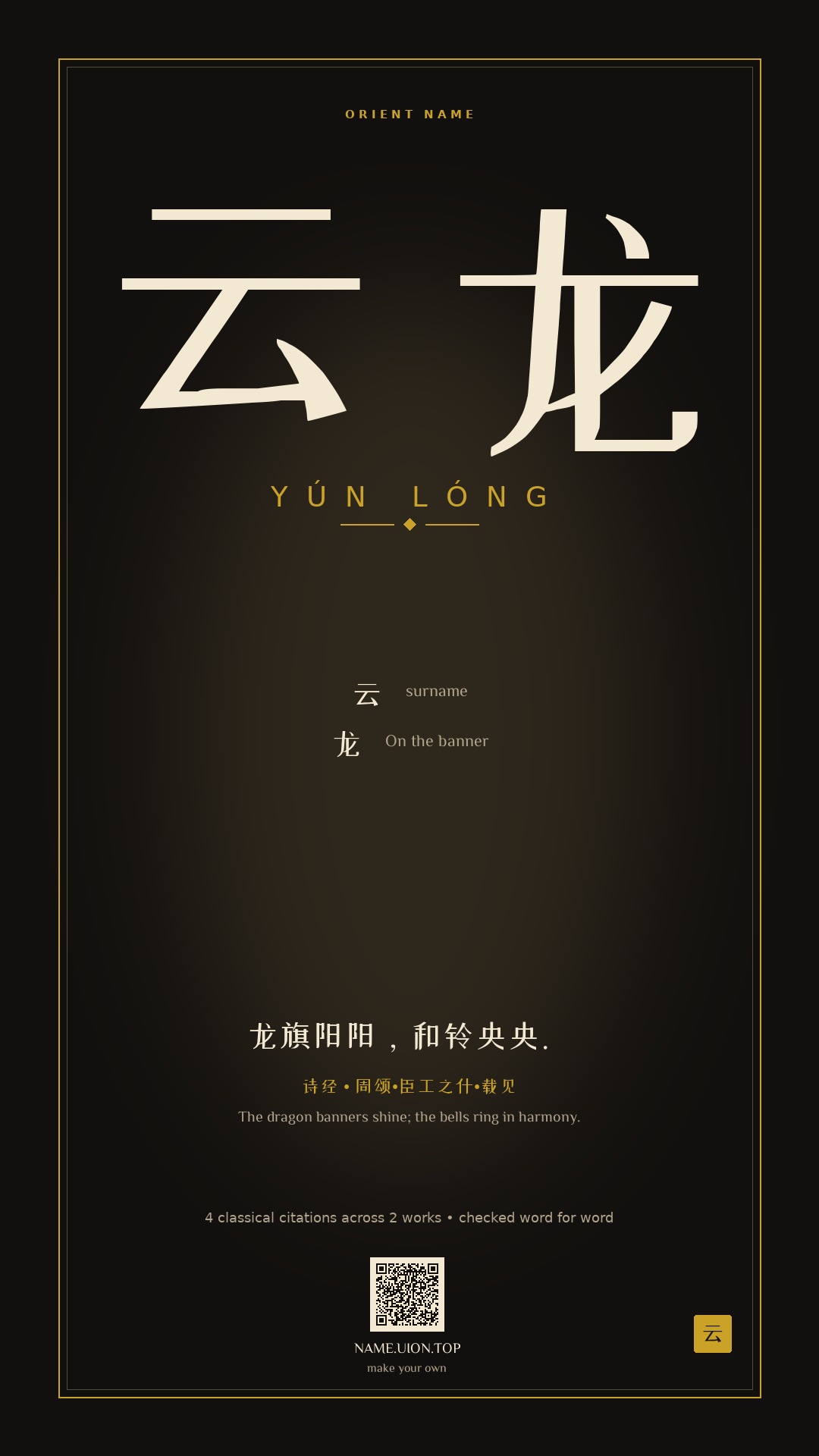
Not a dictionary entry: what the character has meant in Chinese names, with the original line it comes from. Every quotation below is matched character-for-character against a versioned corpus shipped with this site. Where a page names a character's origin, that line is our own paraphrase of the standard dictionaries — it is not a quotation, and it carries no book title for that reason.
行到水穷处,坐看云起时。
Walk to where the water ends; sit and watch the clouds rise.
众鸟高飞尽,孤云独去闲。
The birds have all flown high and away; one cloud drifts off, in no hurry.
长风破浪会有时,直挂云帆济沧海。
A long wind will come to break the waves; I will hoist a cloud-white sail and cross the sea.
Movement without effort — the part of a name that refuses to be pinned down.
「云」给名字的是余地:什么都还没定,但也不是空的。
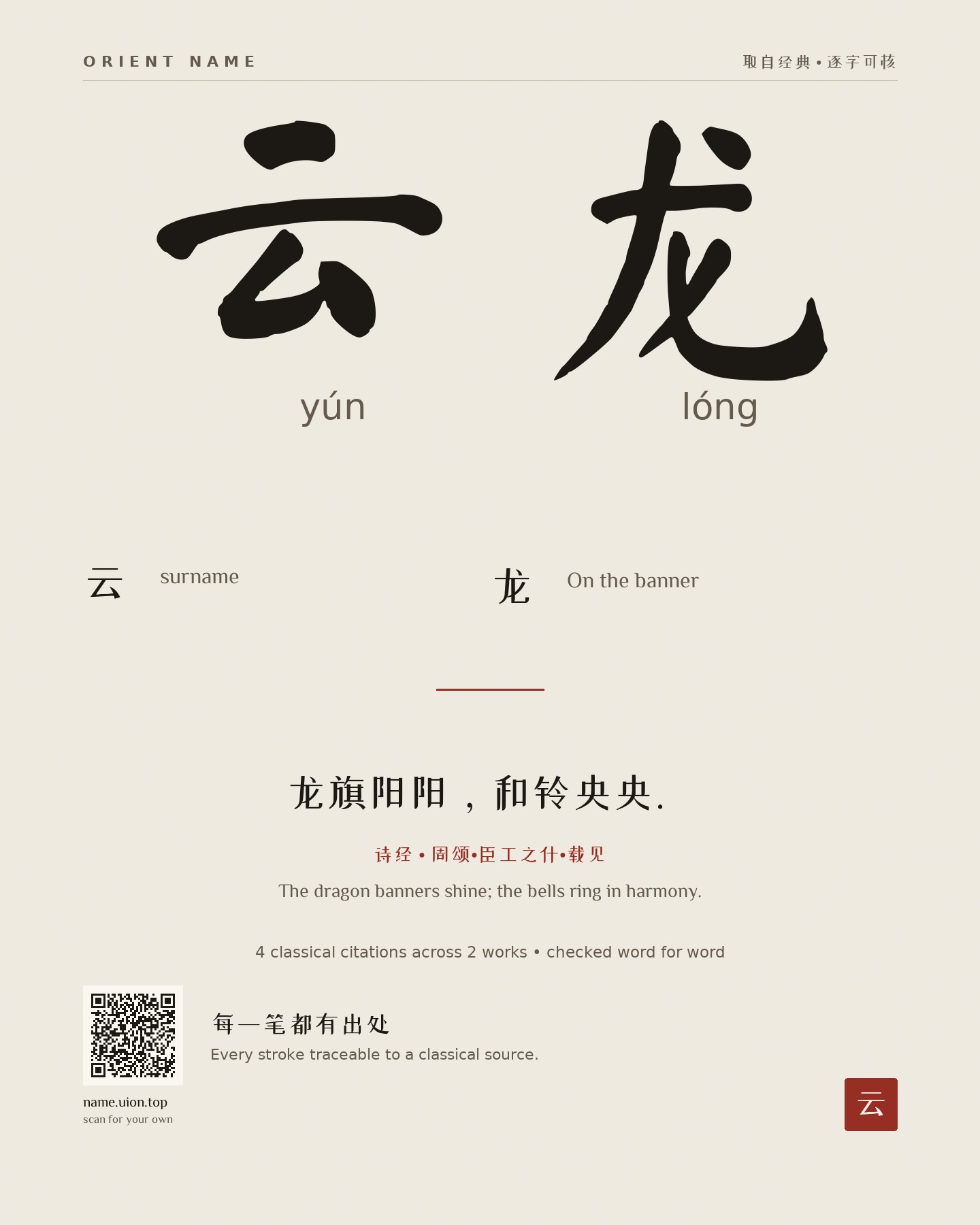
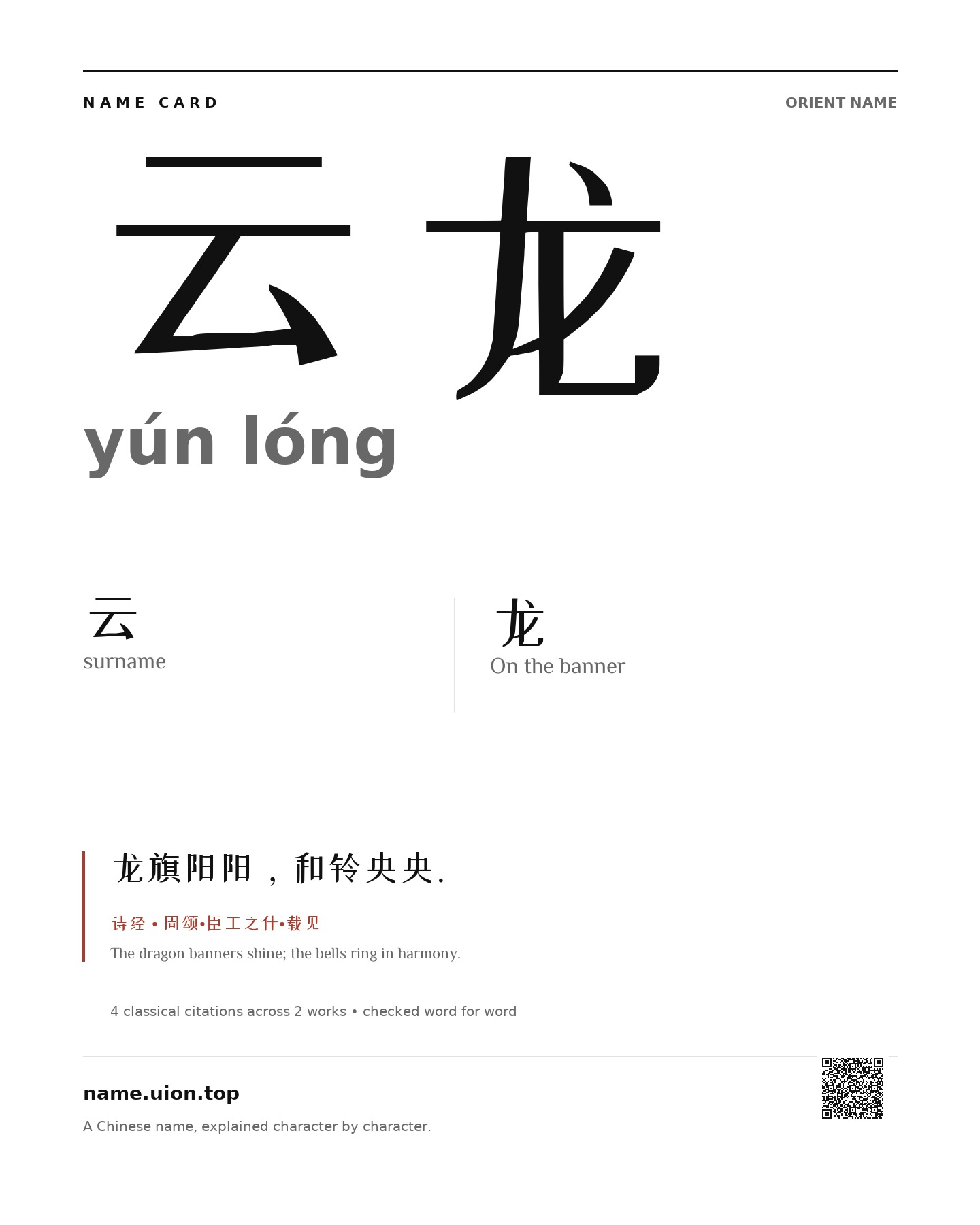
龙旗阳阳,和铃央央。
The dragon banners shine; the bells ring in harmony.
Presence rather than pressure.
「龙」在名字里是气象,不是威压。
Mandarin is tonal: the same letters said on a different pitch are a different word. The line below is the pitch you actually travel while saying the name.
We checked it against a corpus of 1,142,000 real Chinese names — this is not a combination invented for the page.
A lightweight model scores the name on five dimensions — without your birth chart. The full version re-scores it against your chart, explains every deduction, and shows every candidate it considered.
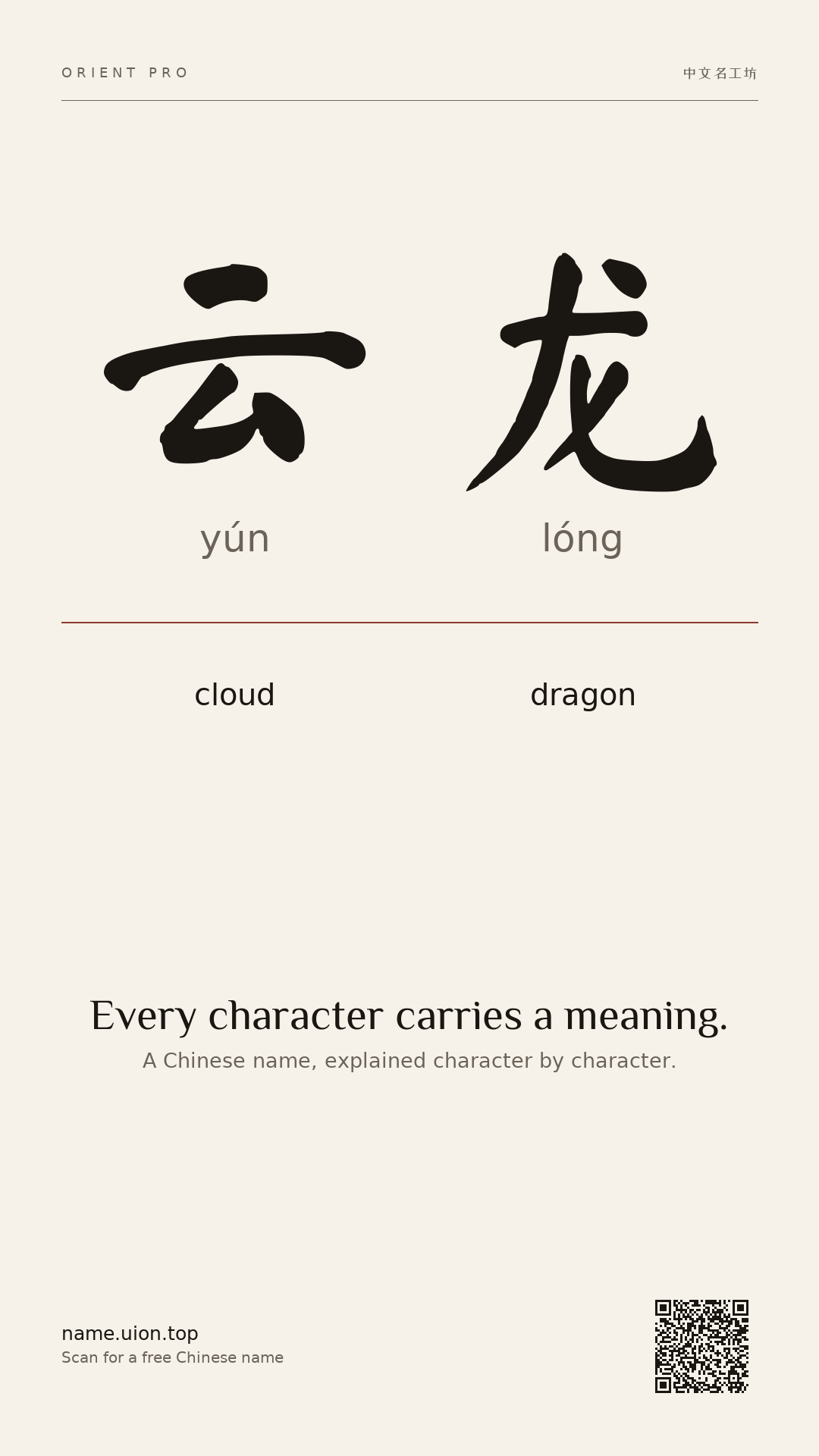
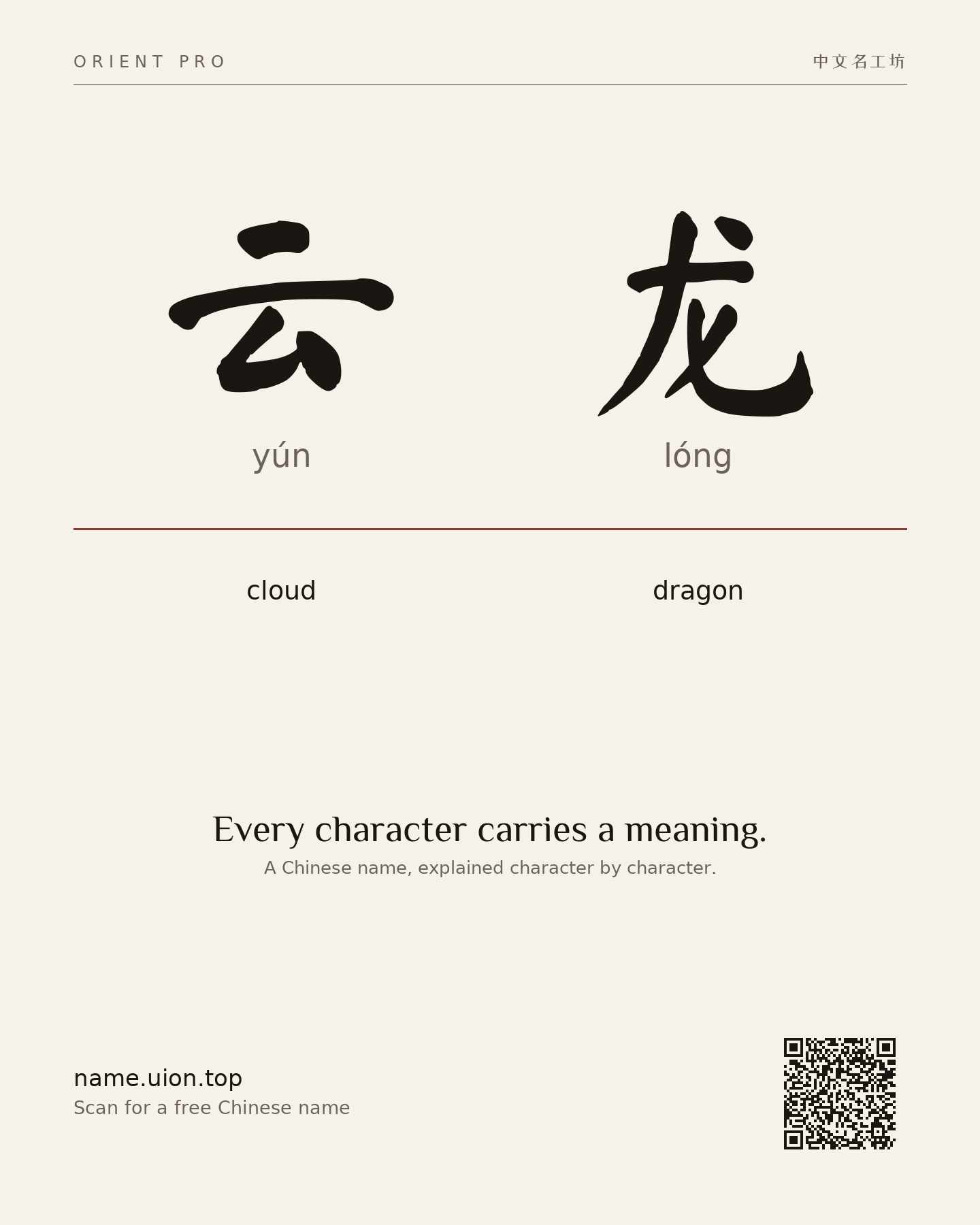
cloud · dragon — taken as one scene rather than three separate definitions.
The cards are rendered with real calligraphy fonts — the name is written, not drawn by an image model, so it can never be misspelt.
You have just seen what every character means, which element it belongs to, its source, and how many real people are actually called this. What Orient Pro adds is judgement: it casts your (or your child's) birth chart, screens every candidate character against it, and gives you the five-dimension score with every deduction explained, all the candidate names it considered, a printable report and a poster.