Not a dictionary entry: what the character has meant in Chinese names, with the original line it comes from. Every quotation below is matched character-for-character against a versioned corpus shipped with this site. Where a page names a character's origin, that line is our own paraphrase of the standard dictionaries — it is not a quotation, and it carries no book title for that reason.
三军可夺帅也,匹夫不可夺志也。
An army can be deprived of its general; a common man cannot be deprived of his will.
志于道,据于德,依于仁,游于艺。
Set your will on the Way, hold to virtue, lean on humaneness, and move freely in the arts.
夫志,气之帅也;气,体之充也。
The will is the commander of the vital energy; that energy fills the body.
Direction, not ambition.
「志」是方向,不是野心。
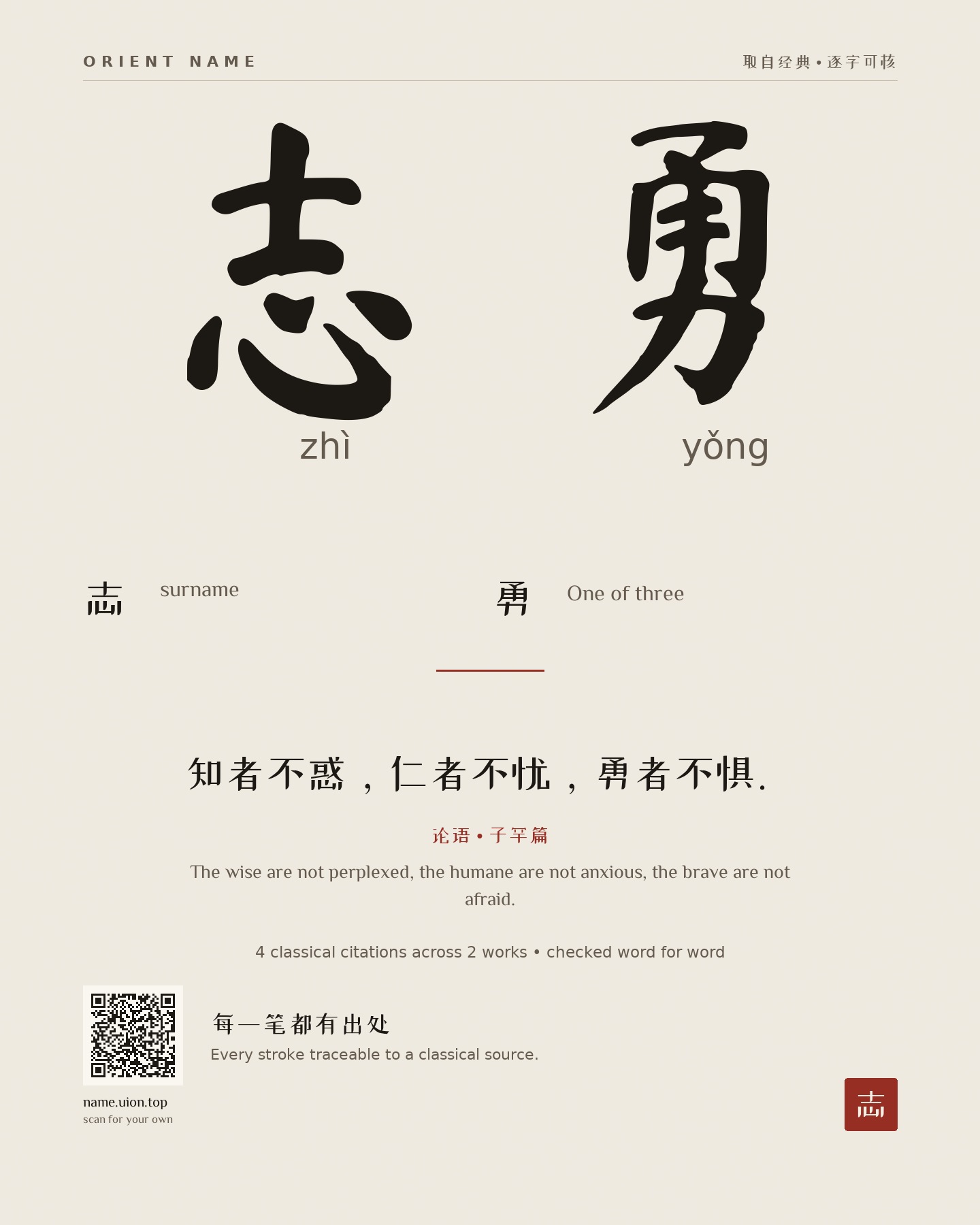
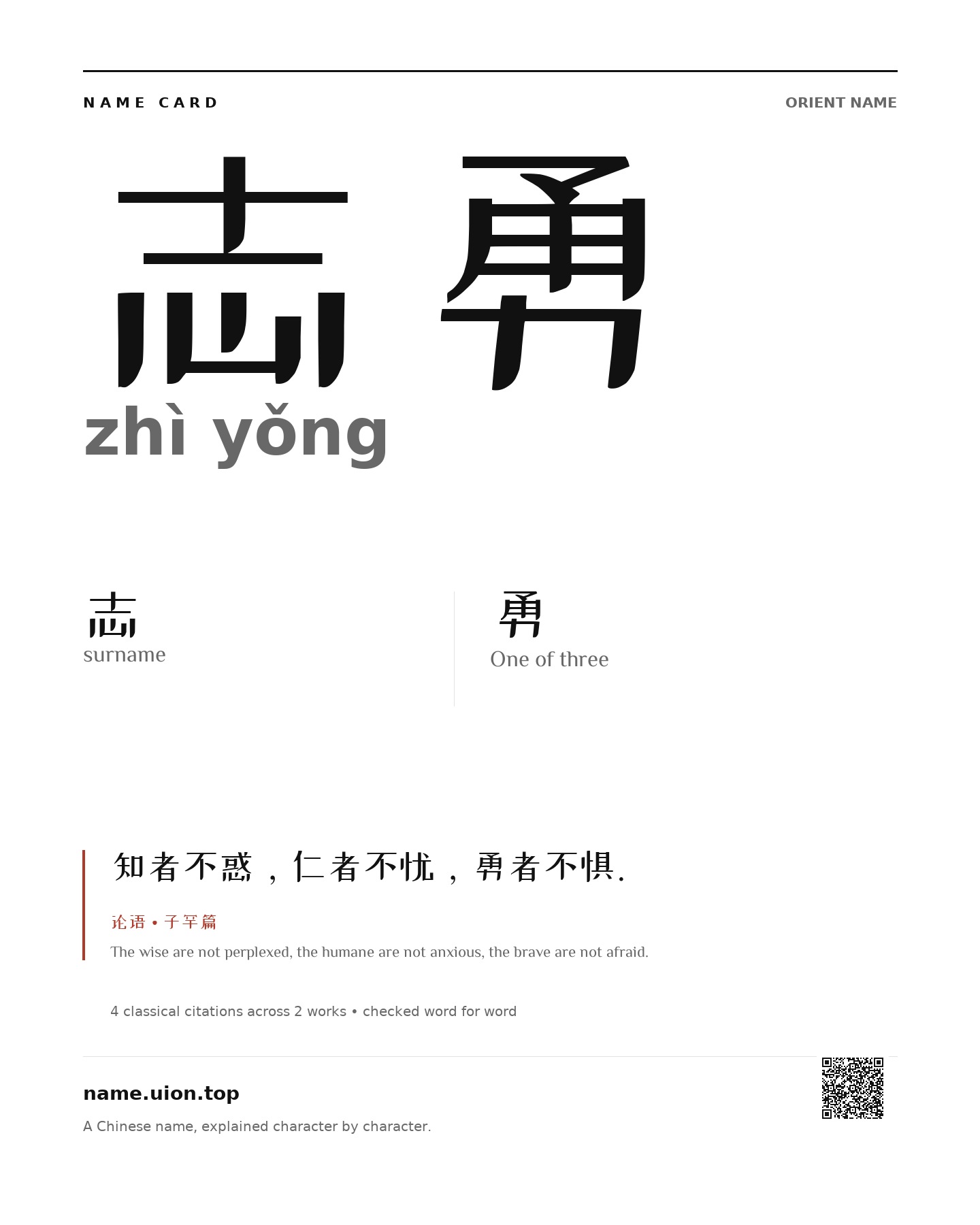
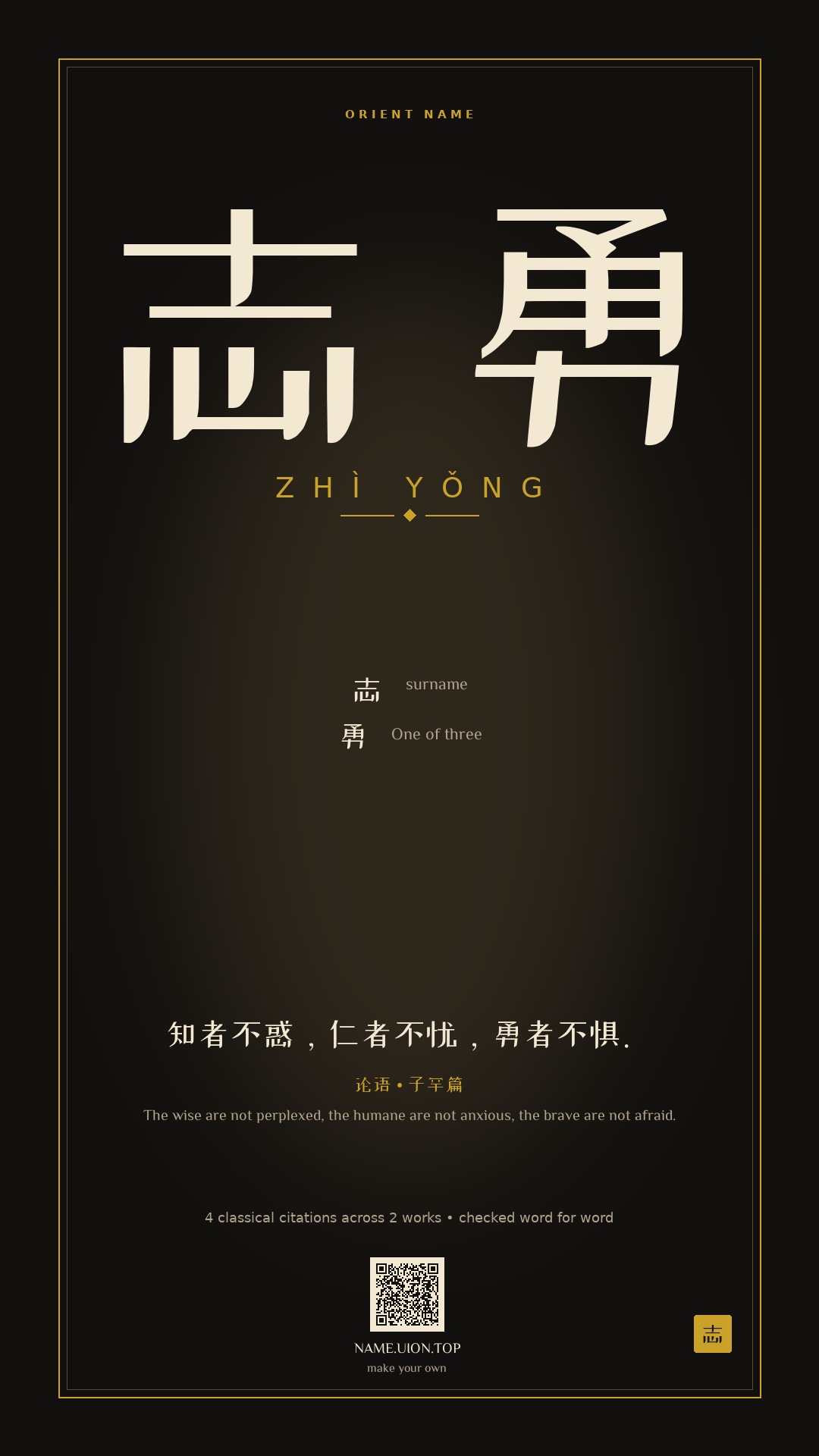
知者不惑,仁者不忧,勇者不惧。
The wise are not perplexed, the humane are not anxious, the brave are not afraid.
Courage always needs something to be for.
「勇」总要配一个方向。
Mandarin is tonal: the same letters said on a different pitch are a different word. The line below is the pitch you actually travel while saying the name.
We checked it against a corpus of 1,142,000 real Chinese names — this is not a combination invented for the page.
A lightweight model scores the name on five dimensions — without your birth chart. The full version re-scores it against your chart, explains every deduction, and shows every candidate it considered.
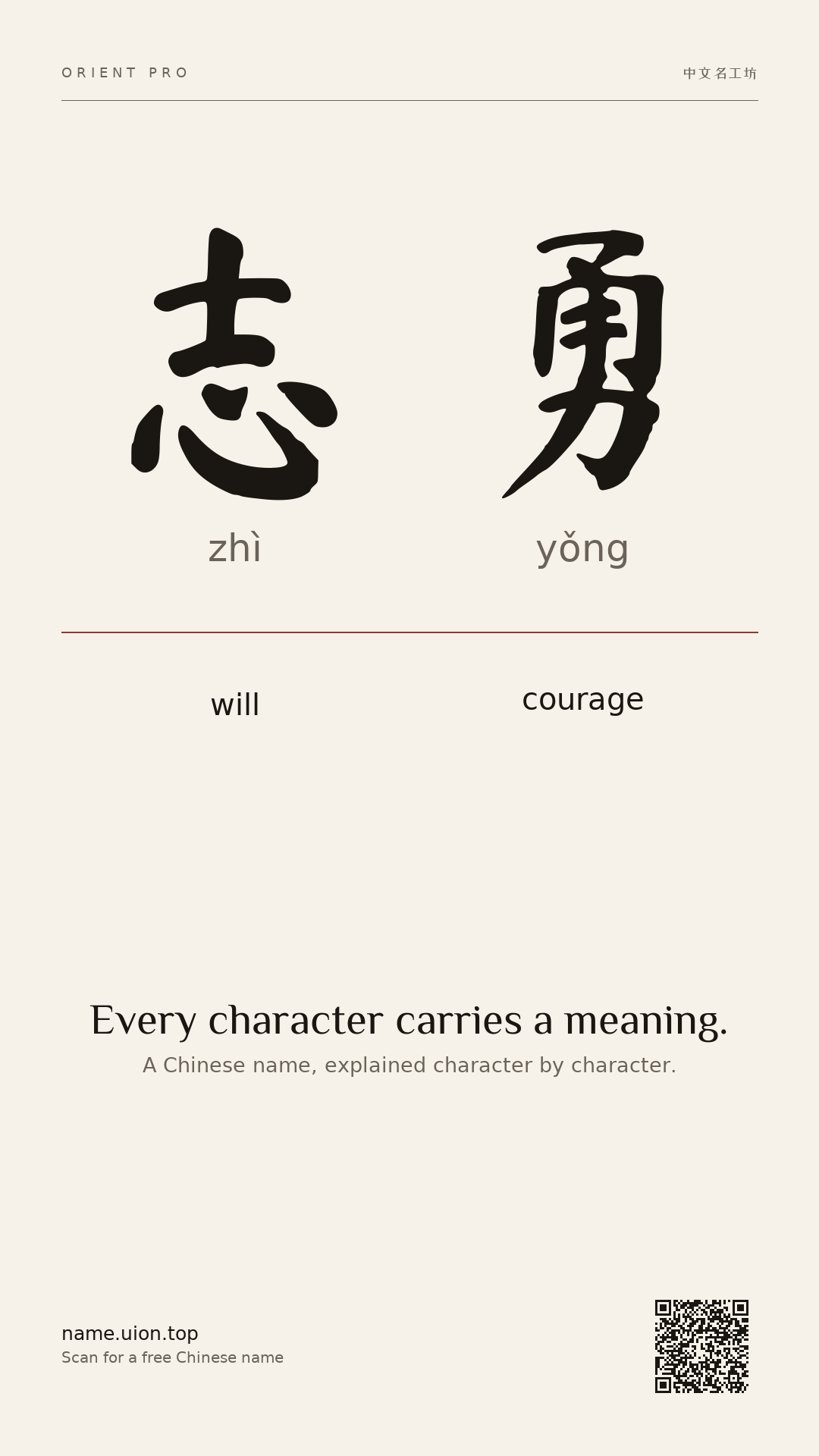
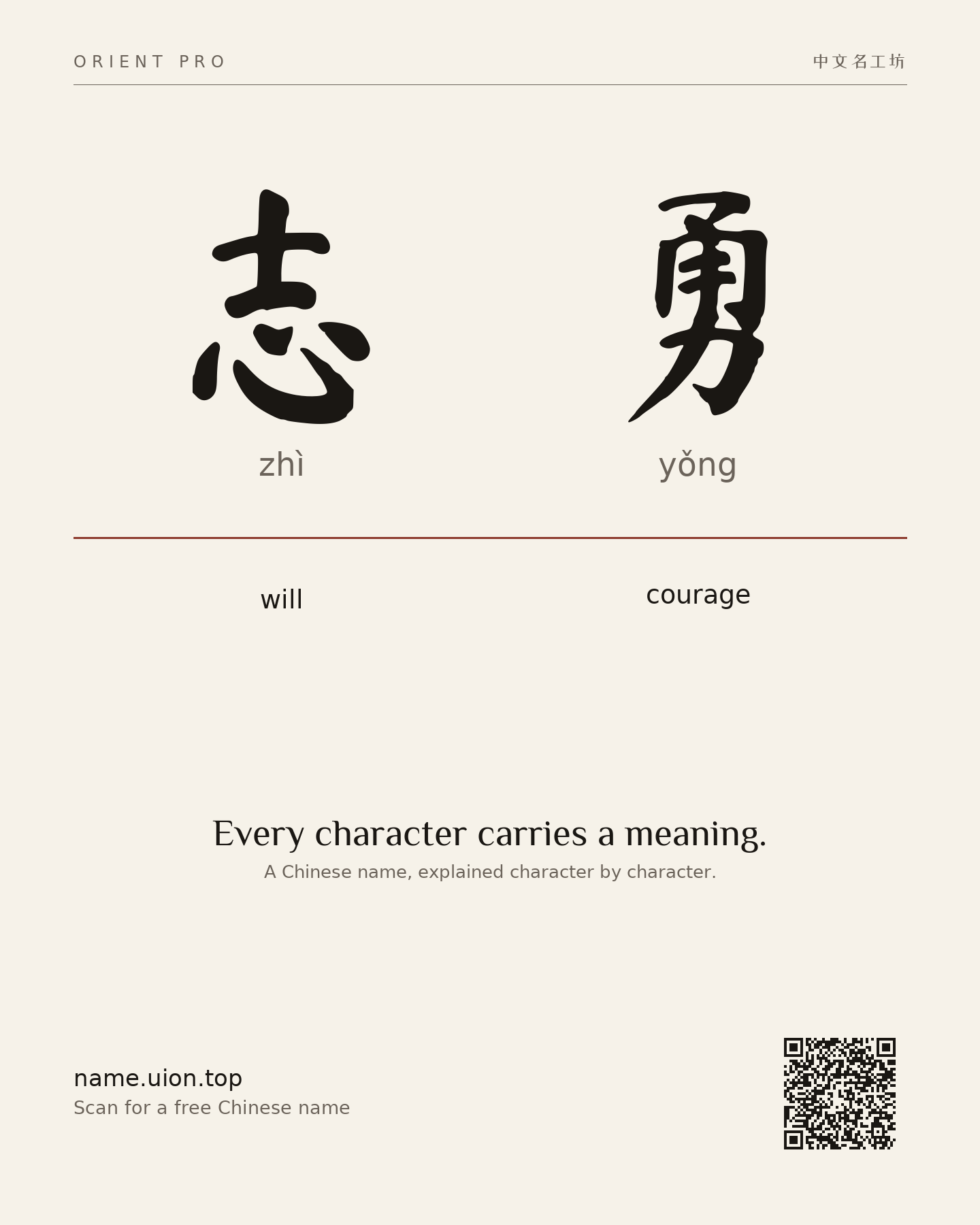
will · courage — taken as one scene rather than three separate definitions.
The cards are rendered with real calligraphy fonts — the name is written, not drawn by an image model, so it can never be misspelt.
You have just seen what every character means, which element it belongs to, its source, and how many real people are actually called this. What Orient Pro adds is judgement: it casts your (or your child's) birth chart, screens every candidate character against it, and gives you the five-dimension score with every deduction explained, all the candidate names it considered, a printable report and a poster.