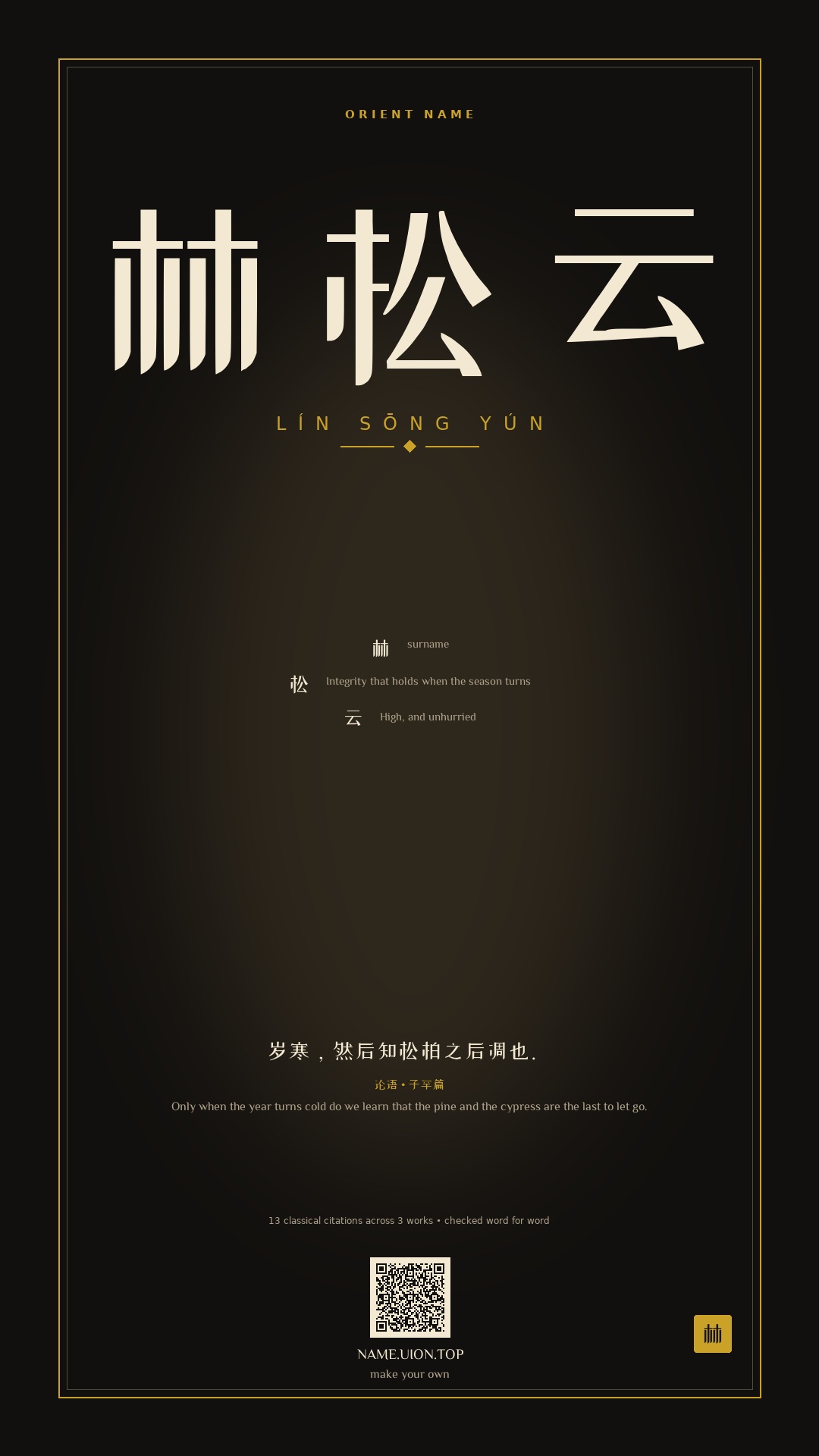
Not a dictionary entry: what the character has meant in Chinese names, with the original line it comes from. Every quotation below is matched character-for-character against a versioned corpus shipped with this site. Where a page names a character's origin, that line is our own paraphrase of the standard dictionaries — it is not a quotation, and it carries no book title for that reason.
返景入深林,复照青苔上。
The low sun enters the deep wood and lights the moss again.
深林人不知,明月来相照。
Deep in the wood, no one knows I am here; the bright moon comes to keep me company.
A grove rather than a single tree: 林 gives the name a place to be, not just an object.
「林」在名字里不是一个字,是一片地方——它让名字有了可以待着的地方感。
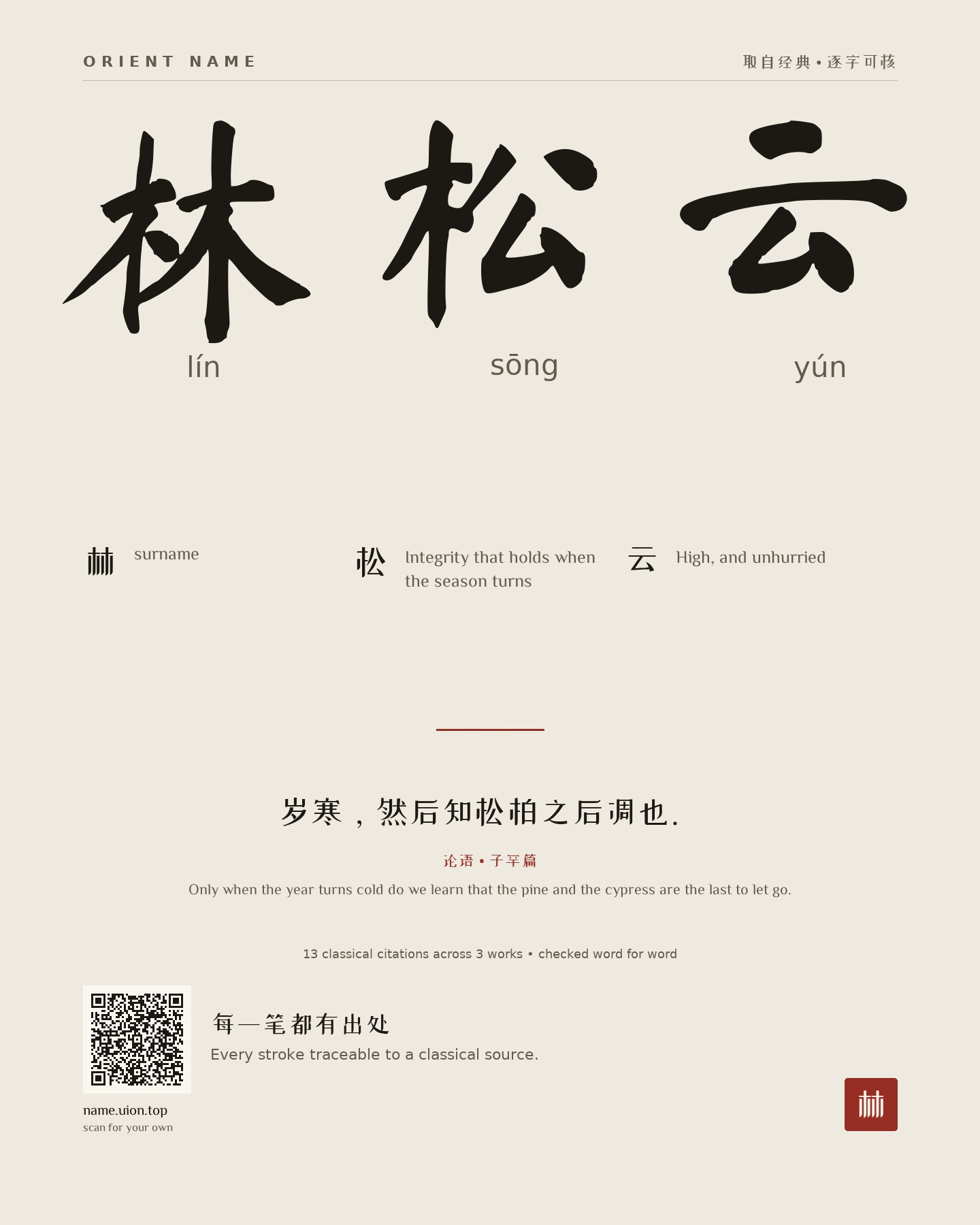
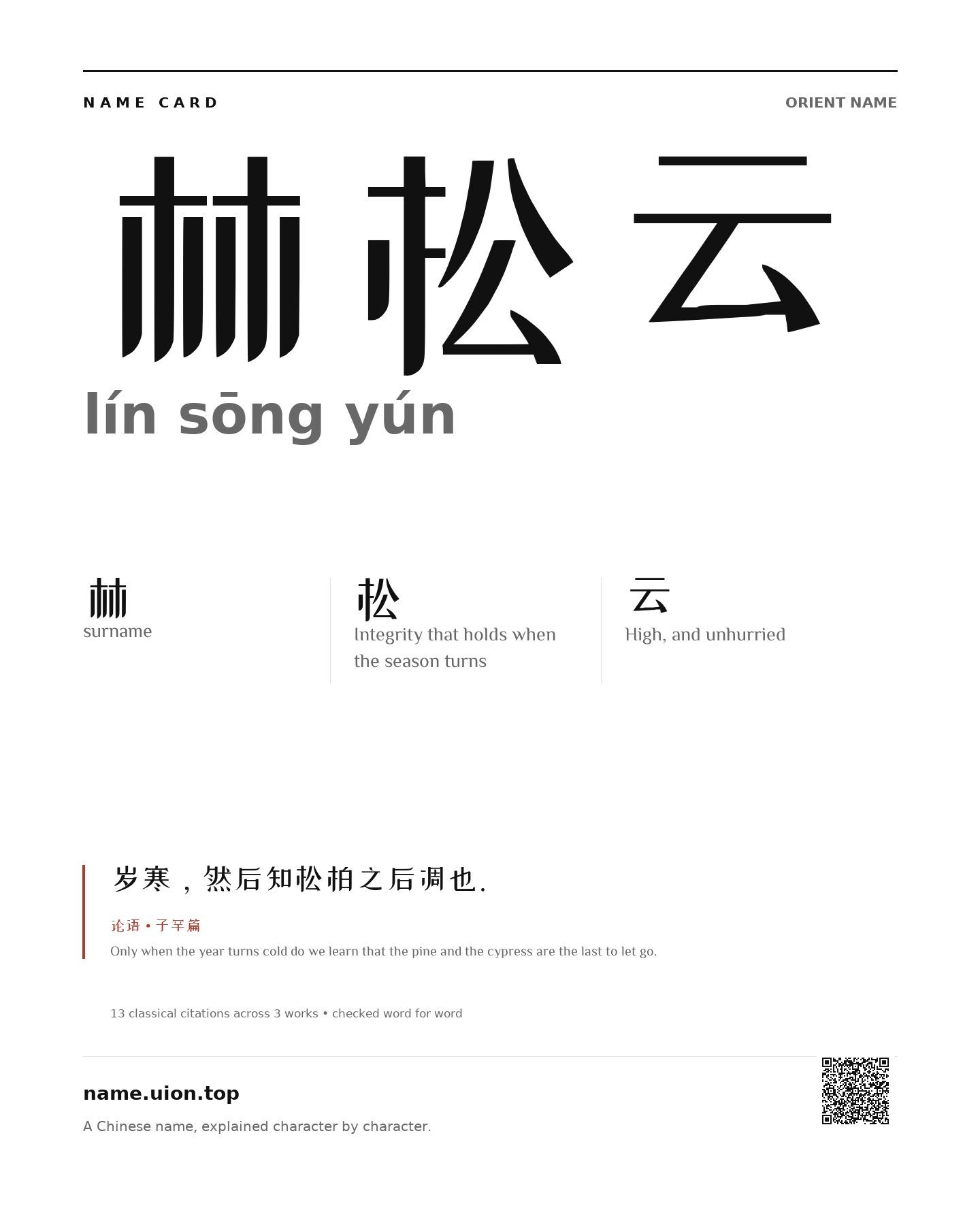
岁寒,然后知松柏之后凋也。
Only when the year turns cold do we learn that the pine and the cypress are the last to let go.
新松恨不高千尺,恶竹应须斩万竿。
I wish the young pines would grow a thousand feet at once — and the bad bamboo should be cut back by the ten thousand.
松柏本孤直,难为桃李颜。
The pine and the cypress are straight and stand alone; they cannot put on the face of peach and plum.
如松柏之茂,无不尔或承。
May you flourish like the pine and the cypress — and may everything you have be carried on by those who come after.
如竹苞矣,如松茂矣。
Firm as bamboo roots, lush as pines.
松风吹解带,山月照弹琴。
The wind through the pines is enough to undo my belt; the mountain moon lights my lute.
为我一挥手,如听万壑松。
He lifts his hand once for me, and I hear pines in ten thousand valleys.
明月松间照,清泉石上流。
Moonlight falls between the pines; a clear spring runs over the stones.
Weight rather than softness. 松 gives a name something that holds, and holds for a long time — and that keeps growing while nobody is watching.
「松」给名字的是分量:撑得住,而且撑得久——还有一层,现在还没长成,也照样往上长。
行到水穷处,坐看云起时。
Walk to where the water ends; sit and watch the clouds rise.
众鸟高飞尽,孤云独去闲。
The birds have all flown high and away; one cloud drifts off, in no hurry.
长风破浪会有时,直挂云帆济沧海。
A long wind will come to break the waves; I will hoist a cloud-white sail and cross the sea.
Movement without effort — the part of a name that refuses to be pinned down.
「云」给名字的是余地:什么都还没定,但也不是空的。
Mandarin is tonal: the same letters said on a different pitch are a different word. The line below is the pitch you actually travel while saying the name.
We checked it against a corpus of 1,142,000 real Chinese names — this is not a combination invented for the page.
A lightweight model scores the name on five dimensions — without your birth chart. The full version re-scores it against your chart, explains every deduction, and shows every candidate it considered.
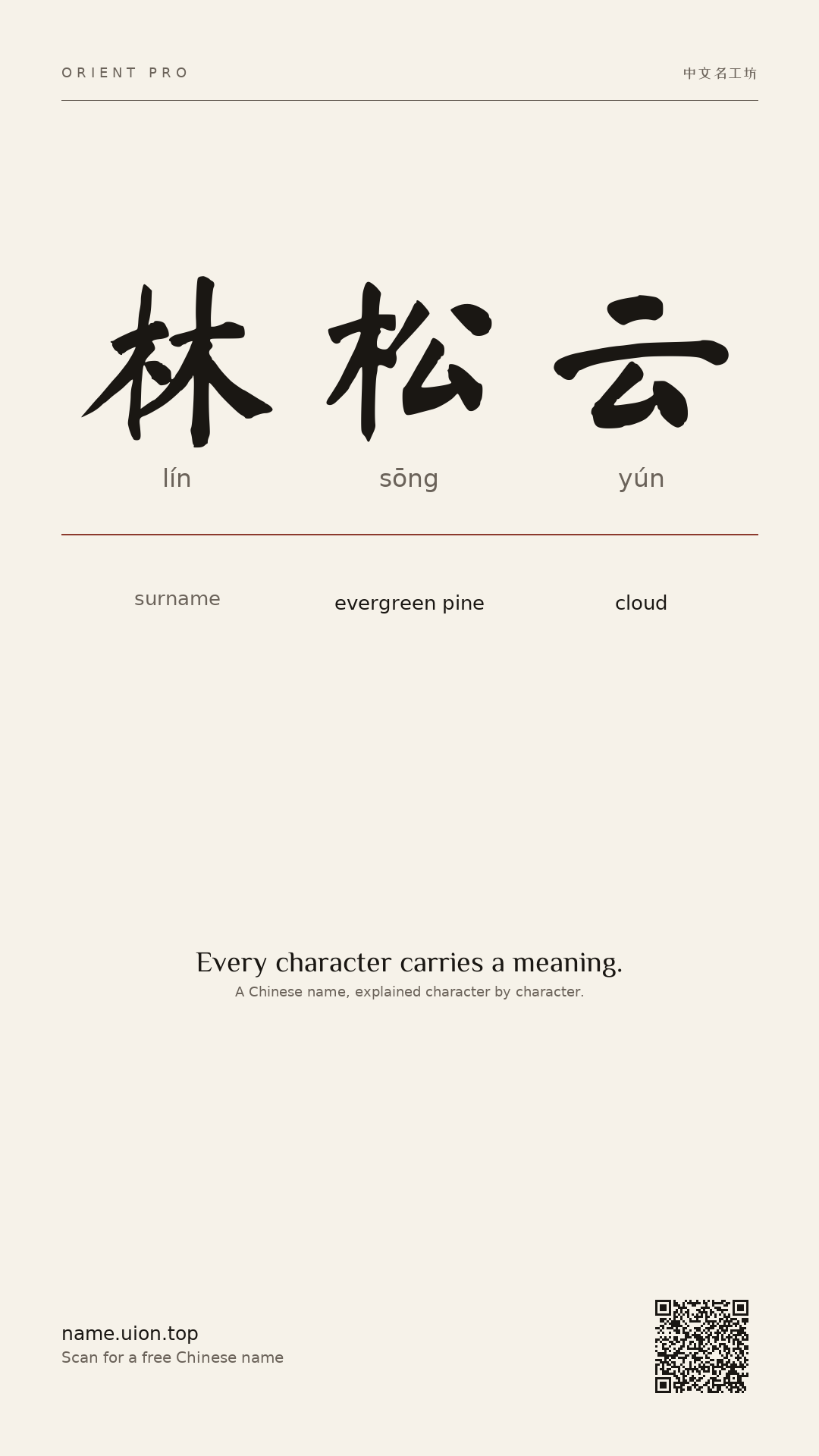
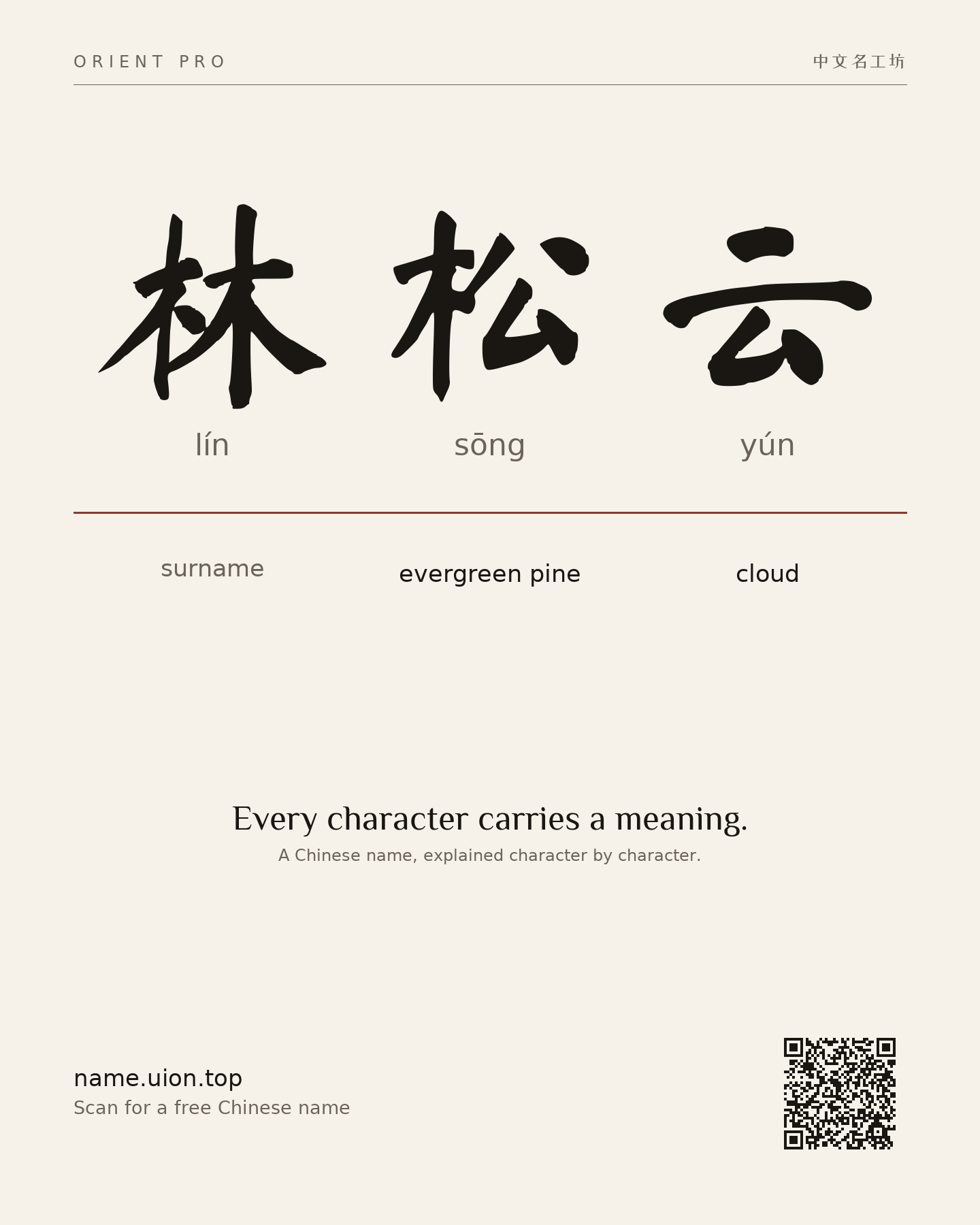
Wood behind, pine in front, cloud above — the three layers of a Chinese landscape painting.
山林在背后,青松在近处,流云在上头——一幅山水画的三个层次。
The cards are rendered with real calligraphy fonts — the name is written, not drawn by an image model, so it can never be misspelt.
You have just seen what every character means, which element it belongs to, its source, and how many real people are actually called this. What Orient Pro adds is judgement: it casts your (or your child's) birth chart, screens every candidate character against it, and gives you the five-dimension score with every deduction explained, all the candidate names it considered, a printable report and a poster.