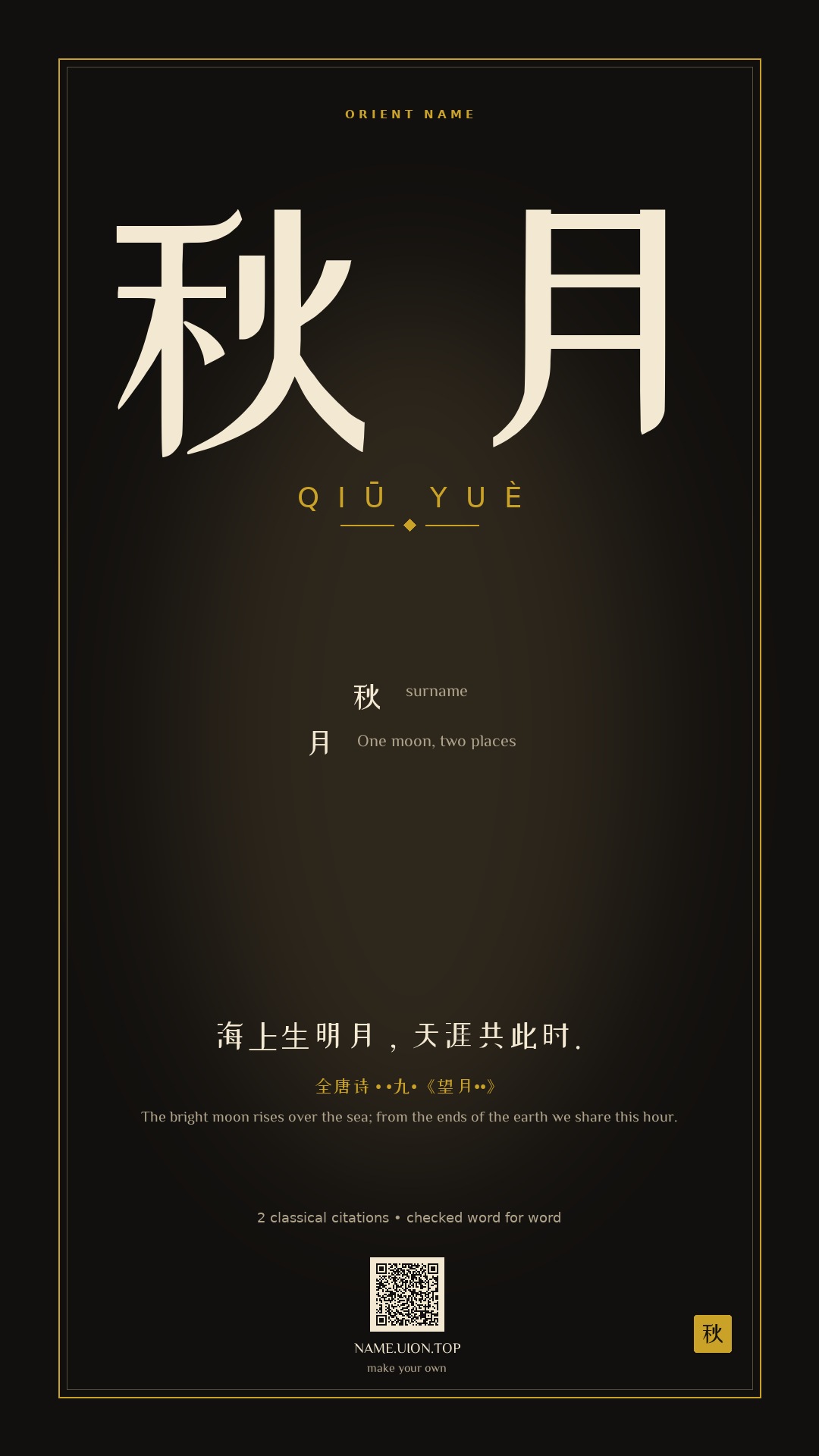
Not a dictionary entry: what the character has meant in Chinese names, with the original line it comes from. Every quotation below is matched character-for-character against a versioned corpus shipped with this site. Where a page names a character's origin, that line is our own paraphrase of the standard dictionaries — it is not a quotation, and it carries no book title for that reason.
自古逢秋悲寂寥,我言秋日胜春朝。
Since ancient times people grieve over autumn's emptiness; I say the autumn day beats a spring morning.
Clear and high rather than melancholy.
「秋」是清高,不是悲凉。
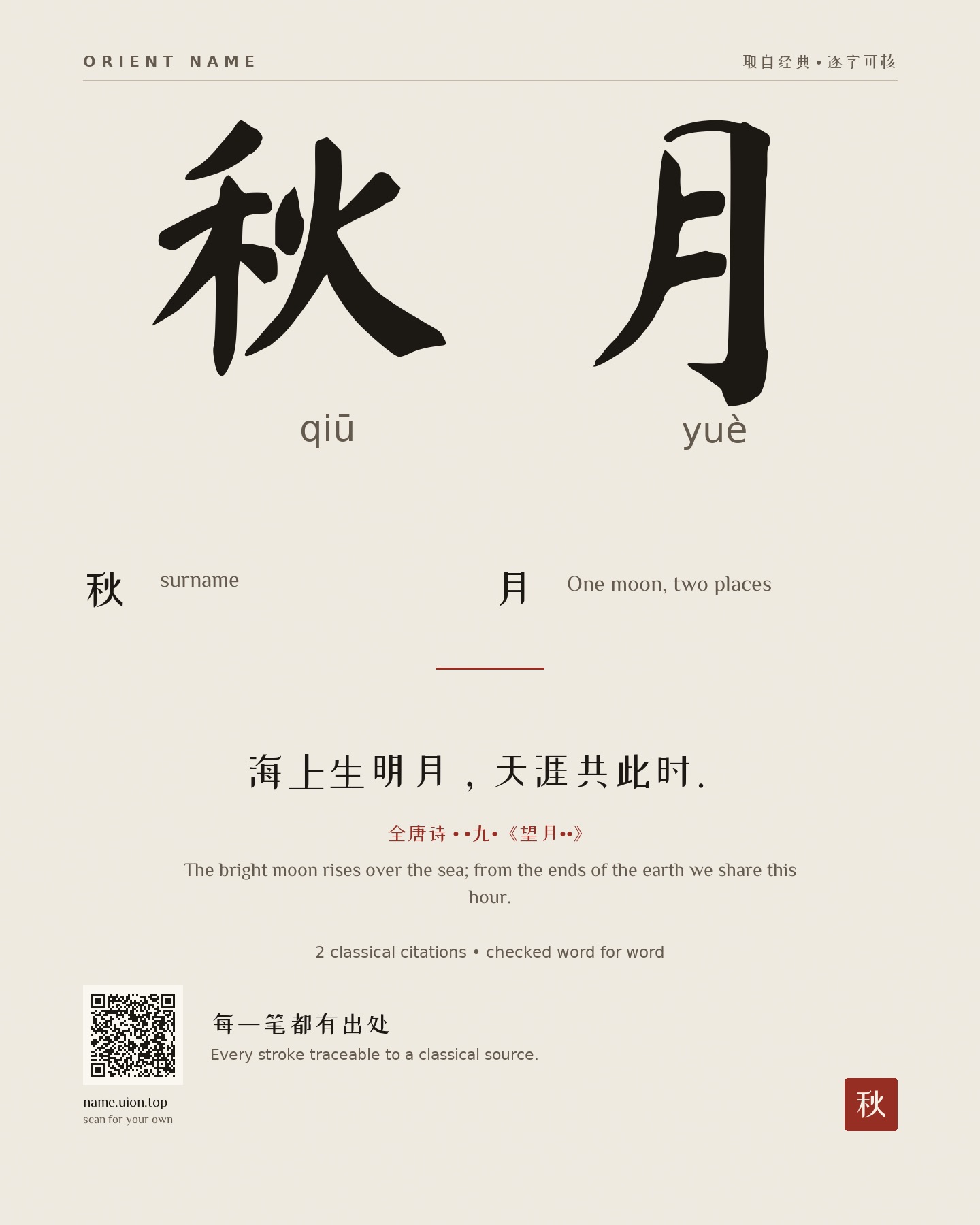
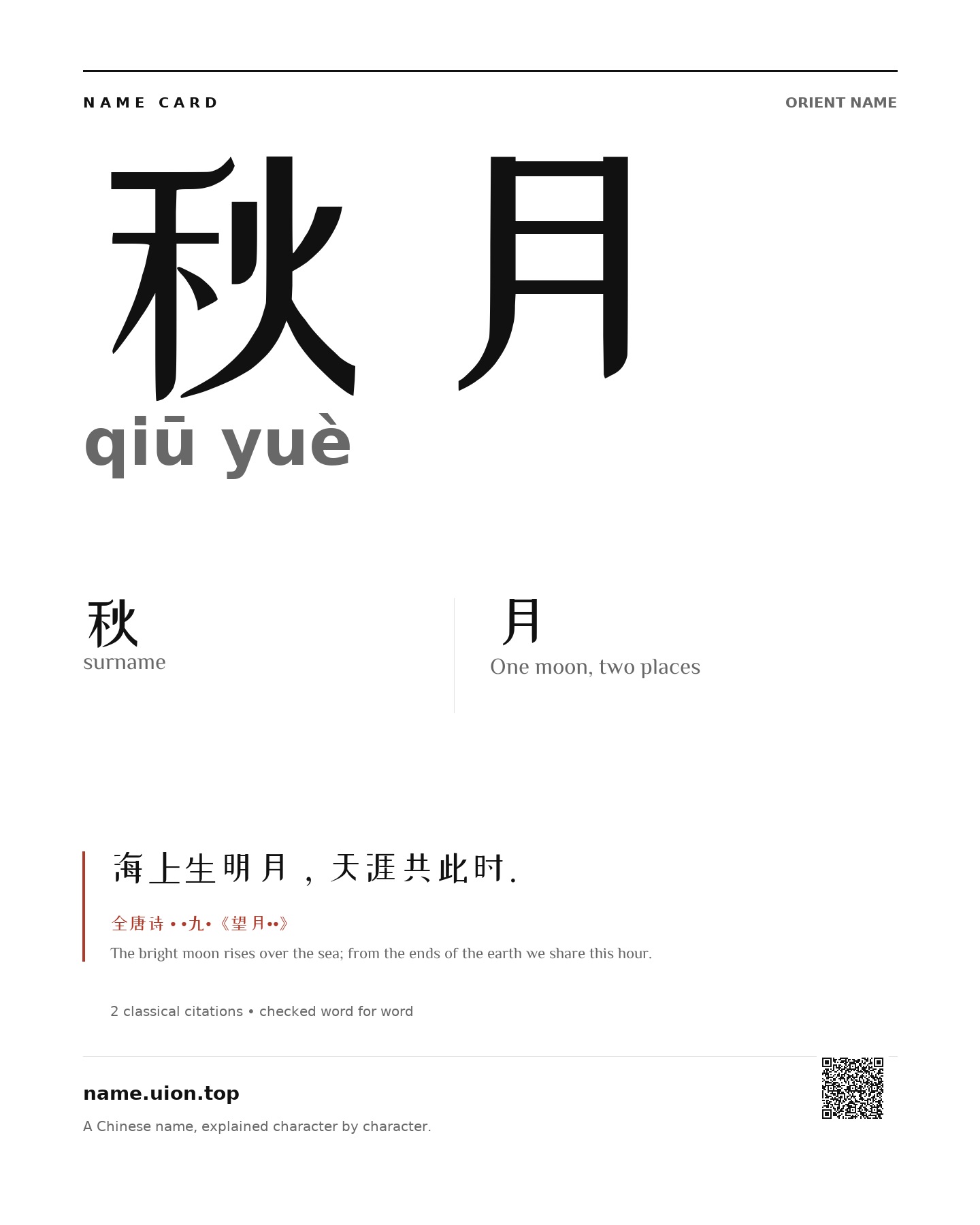
海上生明月,天涯共此时。
The bright moon rises over the sea; from the ends of the earth we share this hour.
The same one, wherever you are.
「月」是隔多远都同一个。
Mandarin is tonal: the same letters said on a different pitch are a different word. The line below is the pitch you actually travel while saying the name.
We checked it against a corpus of 1,142,000 real Chinese names — this is not a combination invented for the page.
A lightweight model scores the name on five dimensions — without your birth chart. The full version re-scores it against your chart, explains every deduction, and shows every candidate it considered.
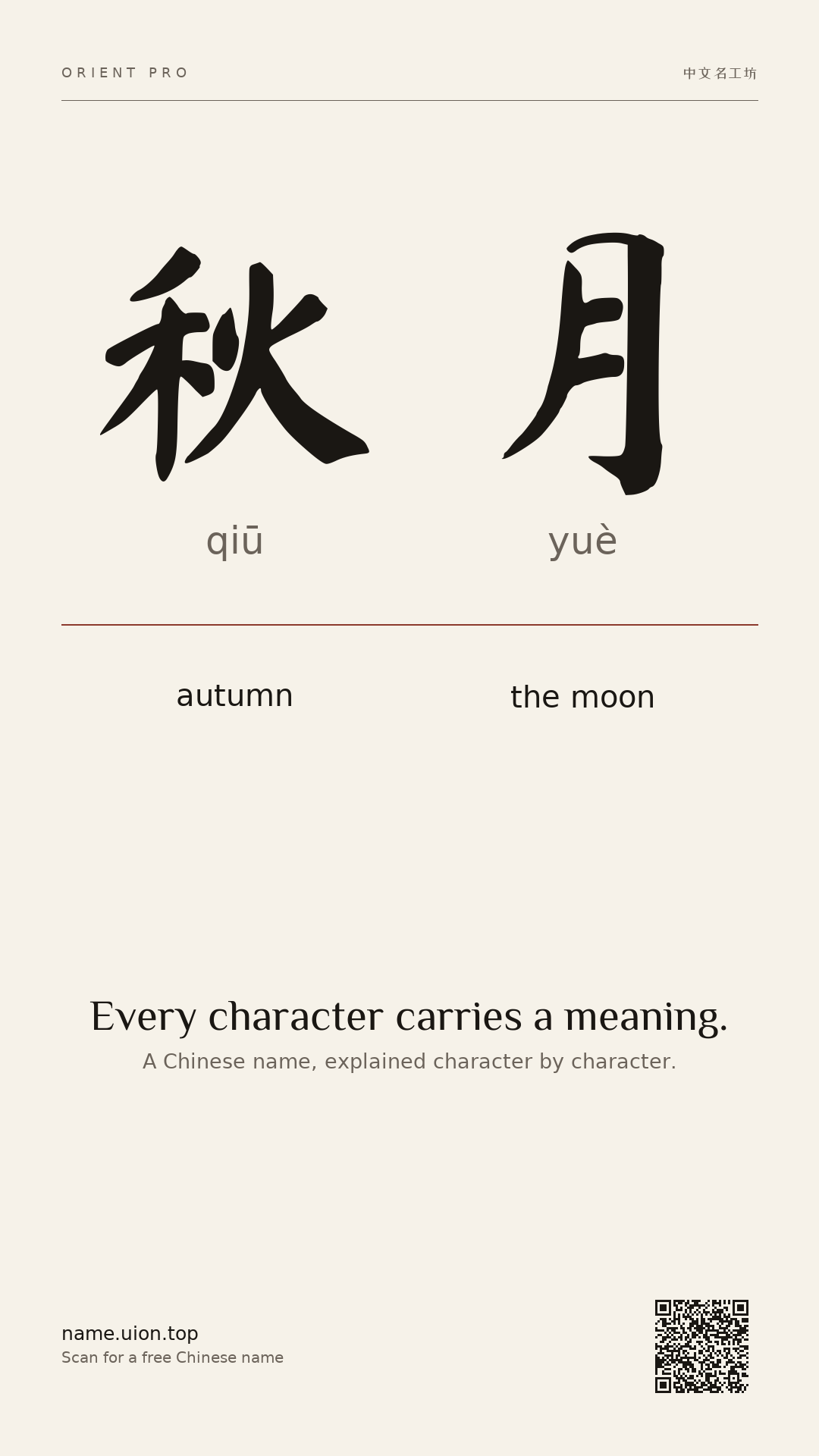
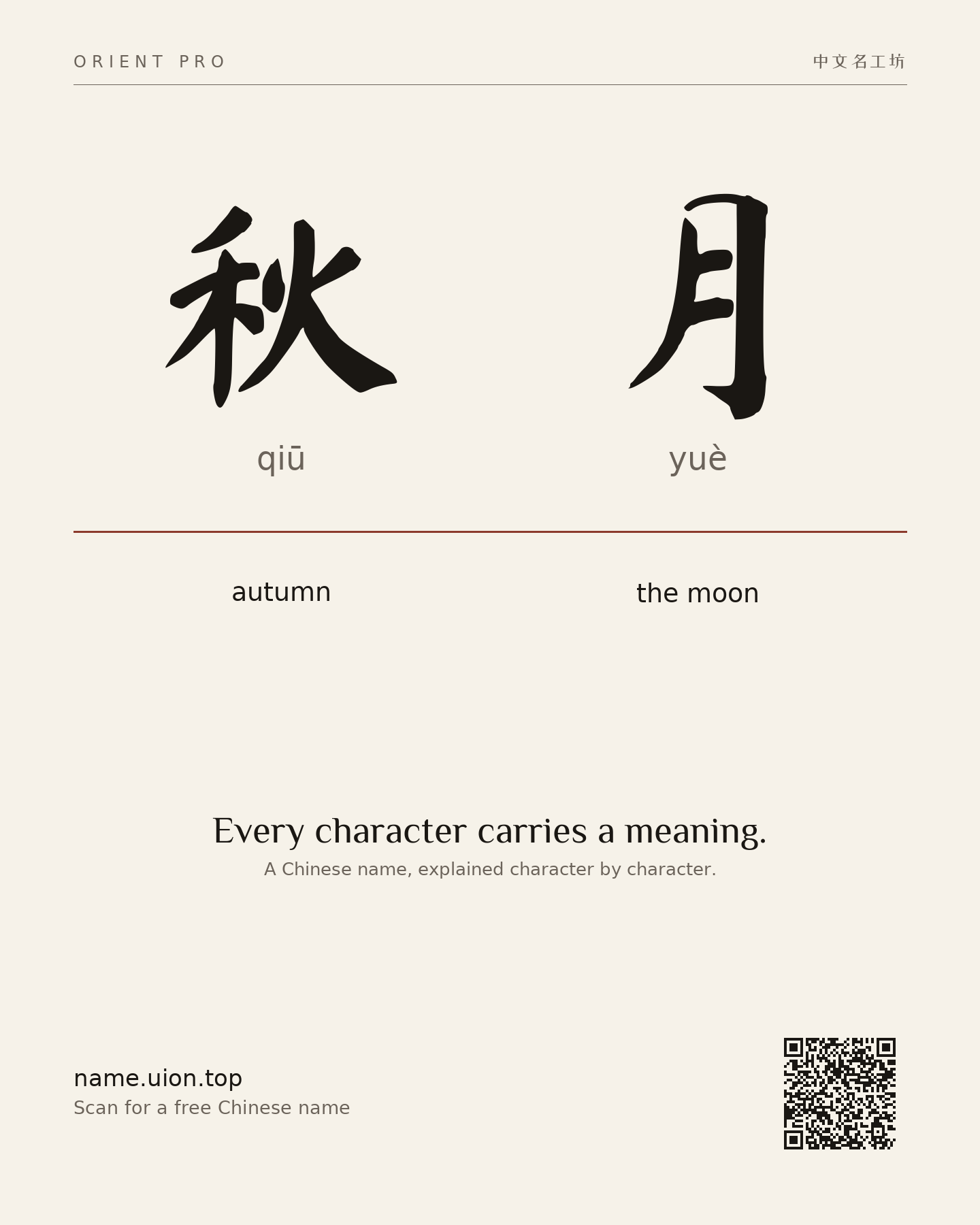
The clearest season, and the moon everyone shares.
秋天最清,月亮最共——一个说季节的干净,一个说隔多远都同一个。
The cards are rendered with real calligraphy fonts — the name is written, not drawn by an image model, so it can never be misspelt.
You have just seen what every character means, which element it belongs to, its source, and how many real people are actually called this. What Orient Pro adds is judgement: it casts your (or your child's) birth chart, screens every candidate character against it, and gives you the five-dimension score with every deduction explained, all the candidate names it considered, a printable report and a poster.