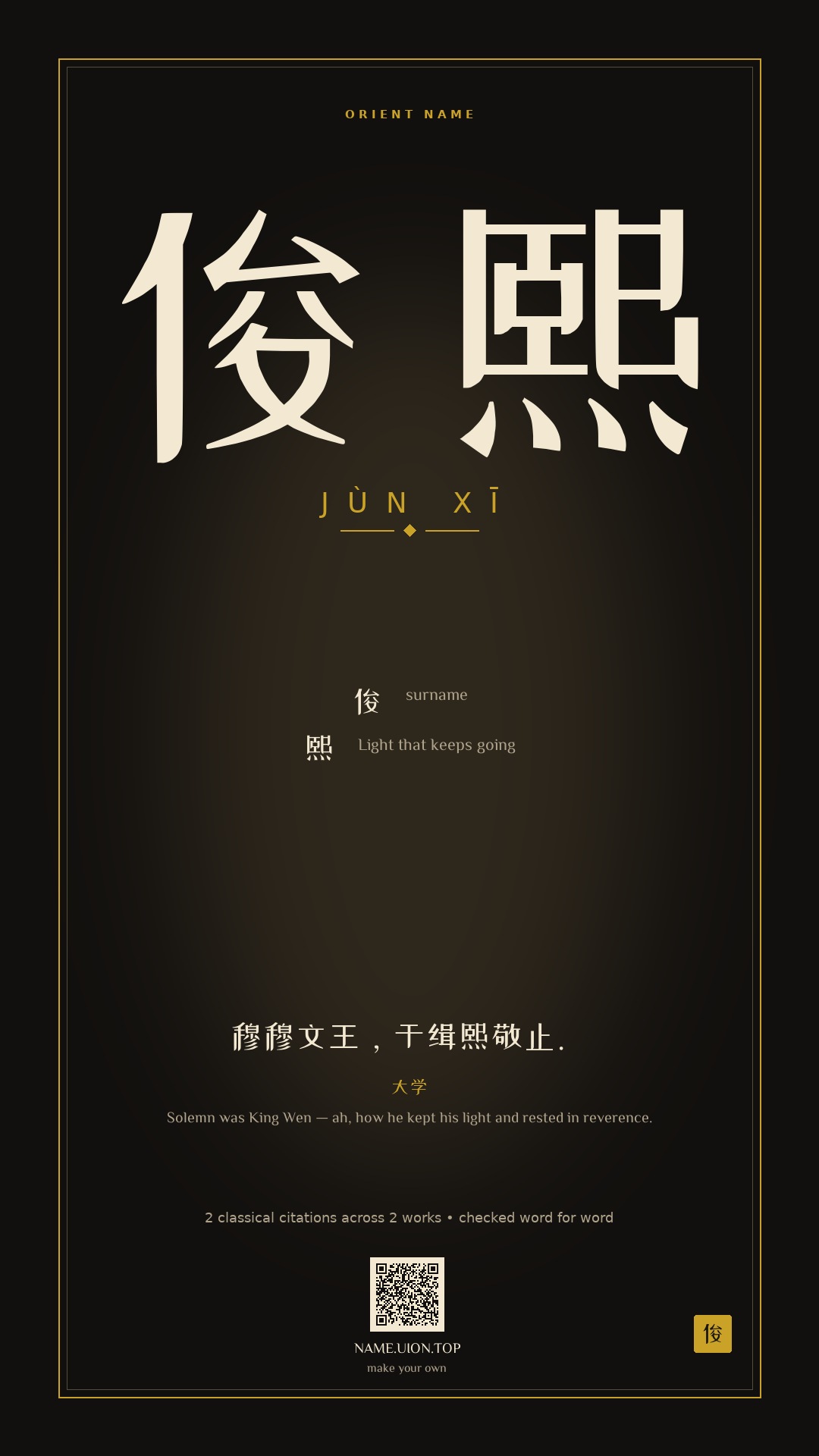
Not a dictionary entry: what the character has meant in Chinese names, with the original line it comes from. Every quotation below is matched character-for-character against a versioned corpus shipped with this site. Where a page names a character's origin, that line is our own paraphrase of the standard dictionaries — it is not a quotation, and it carries no book title for that reason.
贤俊慕而自附兮,日浸淫而合同。
The worthy and able admire it and attach themselves; day by day they merge into one body.
Talent people choose to stand near.
「俊」是人愿意靠近的那种才。
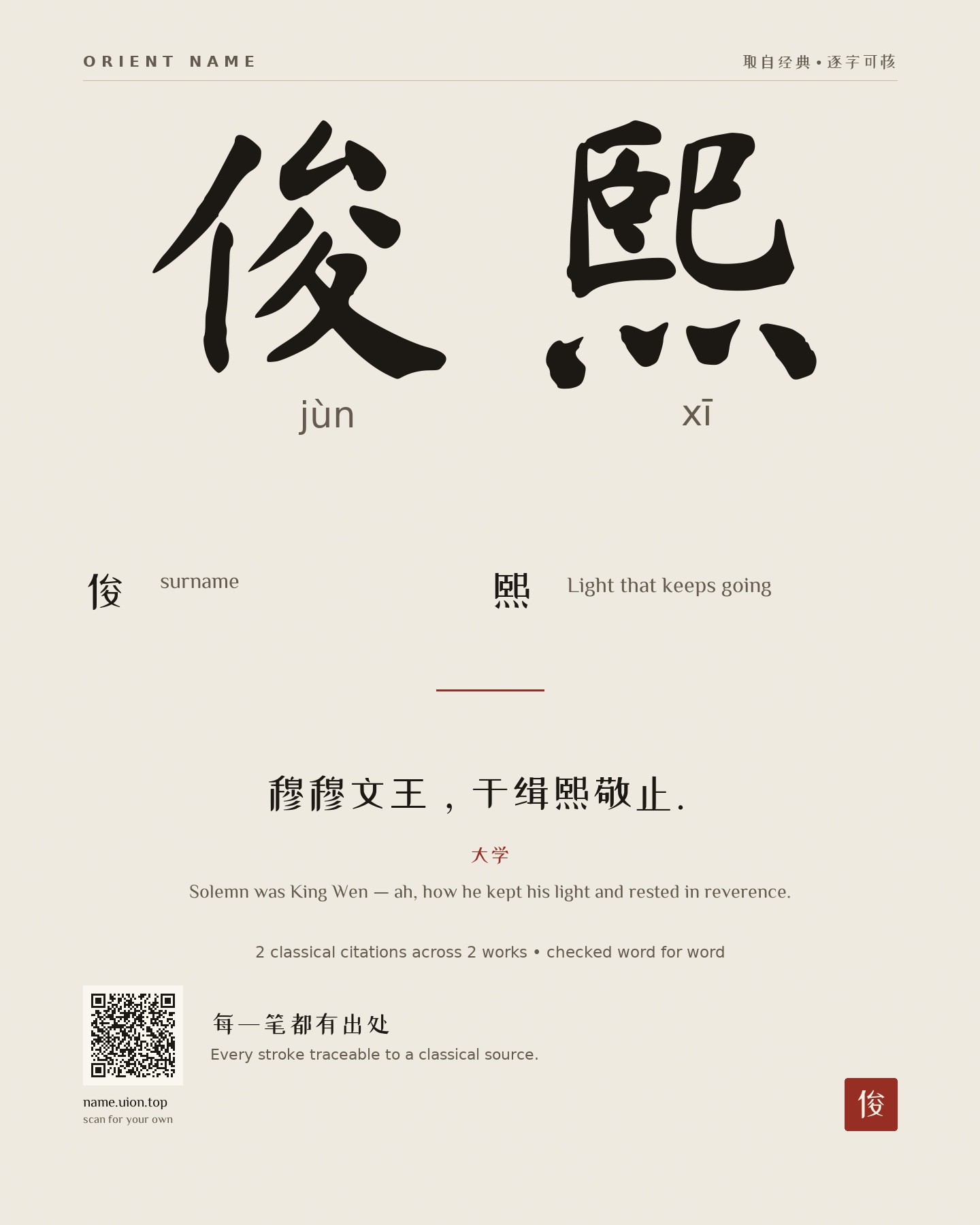
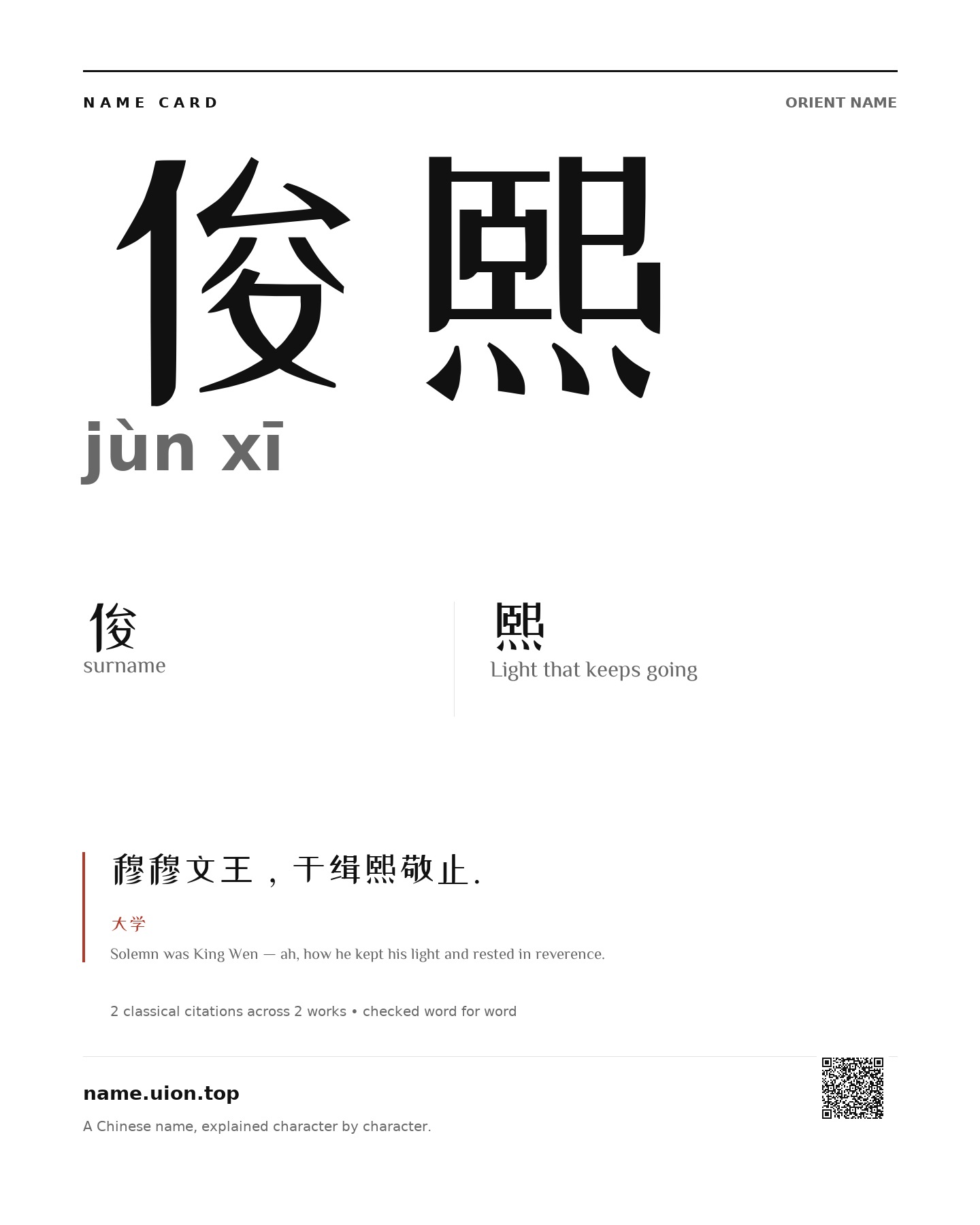
穆穆文王,于缉熙敬止。
Solemn was King Wen — ah, how he kept his light and rested in reverence.
Light that keeps going.
「熙」是持续的光,不是闪一下。
Mandarin is tonal: the same letters said on a different pitch are a different word. The line below is the pitch you actually travel while saying the name.
We checked it against a corpus of 1,142,000 real Chinese names — this is not a combination invented for the page.
A lightweight model scores the name on five dimensions — without your birth chart. The full version re-scores it against your chart, explains every deduction, and shows every candidate it considered.
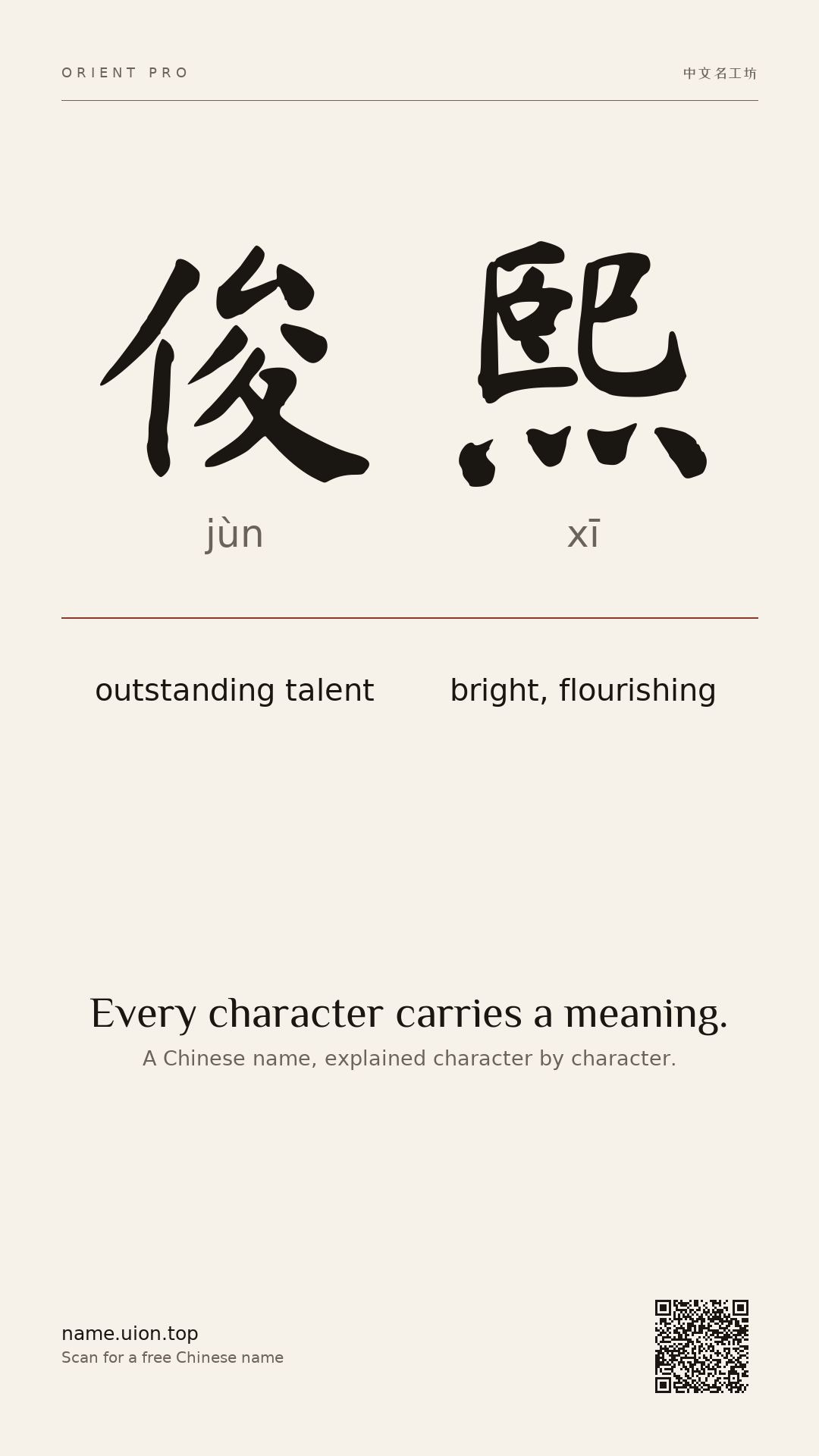
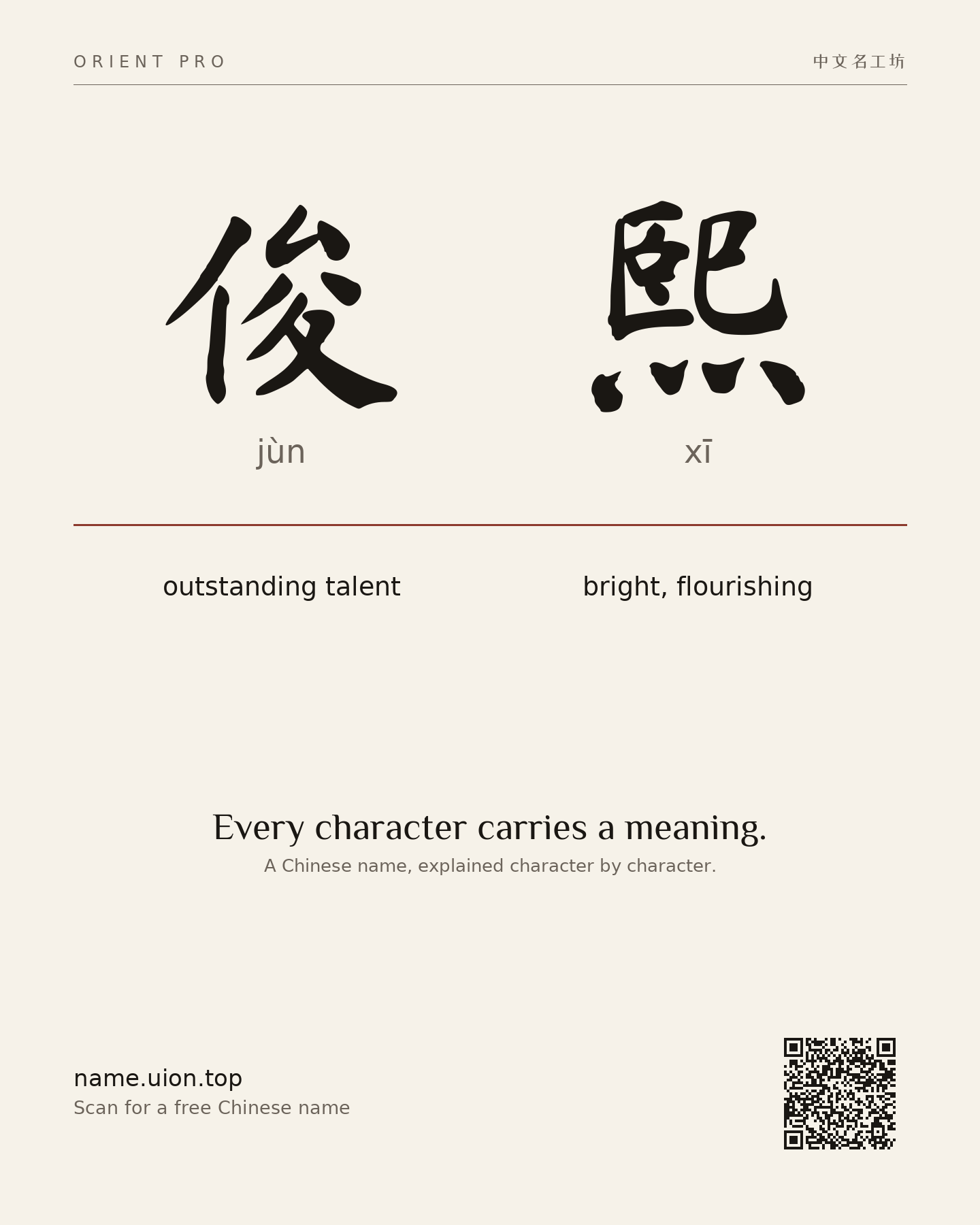
outstanding talent · bright, flourishing — taken as one scene rather than three separate definitions.
The cards are rendered with real calligraphy fonts — the name is written, not drawn by an image model, so it can never be misspelt.
You have just seen what every character means, which element it belongs to, its source, and how many real people are actually called this. What Orient Pro adds is judgement: it casts your (or your child's) birth chart, screens every candidate character against it, and gives you the five-dimension score with every deduction explained, all the candidate names it considered, a printable report and a poster.